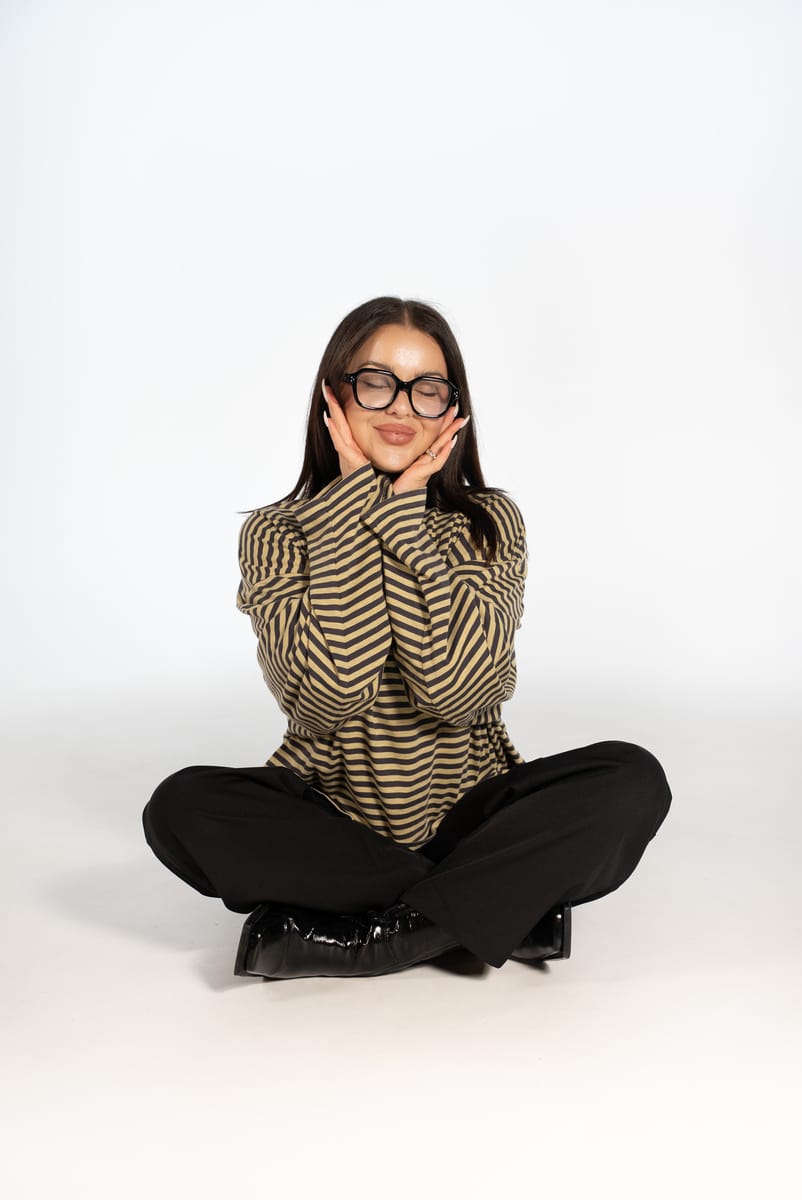

Once upon a brief, cursed, and painfully symmetrical time, the internet convinced millions of people that you could manufacture a personality out of a 9-step morning routine and a Dyson Airwrap.
The chic corporate girlboss who just keeps getting Birkin bags. The Pilates pastel wellness queen with a non-existent waistline. The cosplaying twitch streamer with 1m subs on OF. The cropped tee, tote wearing fashion boy who is so clearly on T it’s impossible to ignore. All different costumes, one shared truth: they were performing the same algorithmically optimised template.
That template is now collapsing in real time. Audiences are bored. And have developed a kind of cultural vertigo.
After a decade of watching strangers behave like NPC versions of themselves, people want creators with a pulse again. I’m talking grounded identity. Something the default influencer archetype was never built to carry.
Audiences are burnt out on “performative personality.”
Influencer fatigue is not just “ugh, too many ads.” It’s deeper. It's psychological.
It's the exhaustion of watching people flatten themselves into marketable fragments. It’s the discomfort of endless self-surveillance: perform your breakfast, perform your skincare, your yoga class, your catch up with your best friend.
There’s also something insanely unsettling watching someone perform their grief, or even their joy. And I sure as hell don’t need you to perform your relationship breakdown in 4K with a caption about growth and “moving on.”
Influencers have completely formatted their identities.
And the audience stopped relating because formatting leaves no negative space. There are no contradictions, no human texture, no real boundaries.
Post pandemic, everyone experienced the weirdest emotional collapse of their lives. Hybrid work blurred the lines between worker-self, personal-self, online-self, and audience-self. People started craving creators who felt like they existed when the camera is off.
Which brings us to the rise of the multi-hyphenate. The grounded creator. The person who has a life offline and refuses to contort themselves into a single monetisable trait.
The new wave is pluralistic, niche, and resistant to formatting.
Many of the creators today who break through do so because they’re unformateable.
They are chefs who are also fashion baddies. Stylists who lecture about textile ethics. Architects who do chaotic apartment tours but also unpack structural failures. Paramedics who teach first-aid between night shifts. Ceramicists who make pottery while giving advice on heartbreak. Curators who drop museum-level cultural analysis into their GRWM.
Their lives don’t fit into a single hook or aesthetic lane. And that is precisely what makes them trustworthy.
People don’t want characters anymore. They want context. Context builds credibility. Credibility builds trust. Trust builds influence, not the other way around.
Real-world examples the industry is obsessed with right now:
Here are the kinds of creator’s brands are gravitating toward, not because they’re polished, but because they’re anchored:
1. The chef-educator hybrids. Think the wave of chefs who popped on TikTok not for dance trends but for technique explanation, knife skills, behind-the-pass realness. Their endorsements hit harder because you know they’ve actually burned themselves on a real stove.
2. The fashion insiders who don’t aestheticise their entire freaking life. Stylists, textile nerds, pattern makers, fashion historians. They’re tired, messy, opinionated, and can explain why a hem matters. These people are shaping taste far more than any lifestyle vlogger with a skincare fridge.
3. The blue-collar influencers. Electricians, carpenters, mechanics, builders, gardeners. Creators whose expertise is so specific, it’s almost soothing. They’re the antidote to glamorised hustle culture, and audiences love them for it.
4. The multi-hyphenate art girls. Designers who also rant about cultural theory. Curators who thrift like archaeologists. Ceramists who unpack the politics of craft. They attract brand deals because they make culture feel accessible, not elite.
5. The “accidental influencers.” People who never intended to go viral: school teachers, nurses, librarians, archivists, baristas, museum educators. They show up online deeply rooted in something other than content. Audiences feel the difference immediately.
These creators don’t “play” at having a life. They actually have one.
And look, I want to be clear. I’m not shading the OG influencer archetype. Get your bag girl, or boy, or however you may choose to identify. I’m merely pointing out that as the internet fragments and audiences grow tired of the circus that is currently the entire world stage, having a more realistic and multi-faceted muse on the web just makes sense.
People are increasingly searching for comfort, relatability, and a way to make sense of the world. Real humans help with that.
So what does this mean for brands?
Stop buying personalities, start buying perspectives.
For years, brand partnership strategy was basically: Find biggest creator + attach logo = success. That model is beginning to fall short.
Brands have realised that visibility ≠ trust. Mass appeal ≠ cultural relevance. And format ≠ influence.
The new winning strategy:
Prioritise experts over aesthetic curators.
Choose voices who serve a community, not a feed.
Invest in creators who can shape culture, not just decorate it.
Build long-term partnerships with creators who have real-world credibility.
Stop treating creators like human billboards and start treating them like collaborators with POVs.
It’s time to hero cultural conduits.
At the end of the day, there’s a lot of struggles in the world right now.
We’re all burnt out, doing a million things at once, trying to maintain a job, a social life, a mediocre body and a reasonably tidy house. Not to mention afford things that we like, eat at the places we love, and remain happy and optimistic about the sinking ship we’re on.
Seeing creators that live in the same world we do is refreshing. It’s aspirational.
Nobody wants to see a 14-step skincare routine and a lifetime supply of Olipop when they’re scraping together coins for drugstore foundation or so sleep deprived from their 3 kids that the bags under their eyes have bags. Like, f*ck off.
This is why influence is shifting from being the loudest voice in the room to being the most grounded one.
This is what replaces the default influencer: a more human, more contradictory creator class. People who don’t exist solely to serve the algorithm. And who bring lived experience, work identities, hybrid skill sets, and taste to the table.
-Sophie Randell, Writer
Not going viral yet?
We get it. Creating content that does numbers is harder than it looks. But doing those big numbers is the fastest way to grow your brand. So if you’re tired of throwing sh*t at the wall and seeing what sticks, you’re in luck. Because making our clients go viral is kinda what we do every single day.