


Remember when Apple was the cool one?
White earbuds. Glowing logo. Blue bubbles.
This year it launched a $2,000 phone that folds in half, and the screens started cracking down the middle within days. Samsung turned it into an ad the same week.
So what happens when the coolest brand on earth starts playing it safe?
-Abdel Khalil, Still Has Blue Bubbles
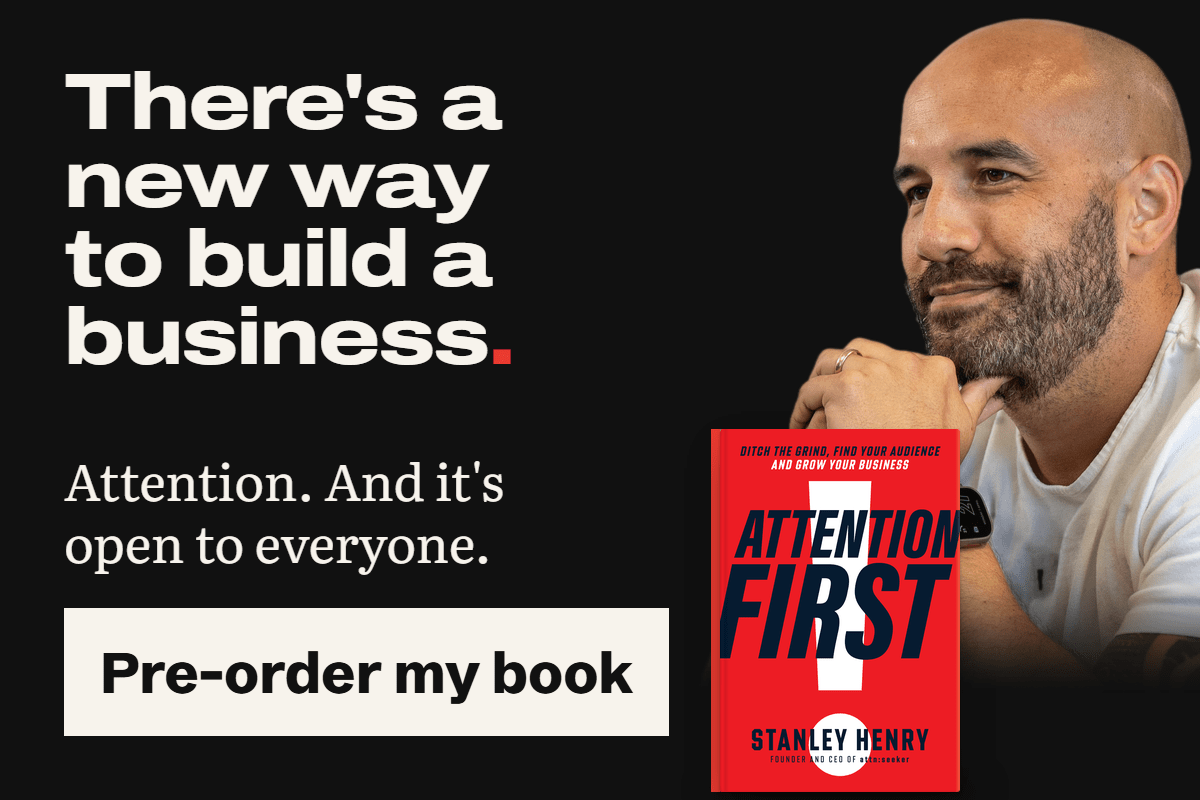
The Attention Seeker started at my kitchen table with one post. Posting changed everything for me. It can for you too. This book is how I'd do it in your shoes. Pre-order before 8 Jan 2027, send me the receipt, and get a free seat at my webinar, How to win on social media in 2027. Usually 189. Live 13, 20 or 27 Jan, or 10 Feb, 3pm NZDT.
Apple’s Flop Era and the Death of "Think Different"

Android users everywhere are currently having the absolute time of their lives, and honestly, you can’t blame them. After a decade of enduring smug green-bubble jokes and endless lectures about superior ecosystem hardware, the tech world is watching Apple enter a full-blown, undeniable flop era.
Now, don’t get me wrong. I’ve always been a die-hard Apple girly. Since my first iPod mini I knew this brand had my heart, and my wallet. And boy, did it have my wallet. Let us not forget this is a company that once charged $19 for a polishing cloth, asked $200 for a VESA mount, and sold $700 wheels for the Mac Pro.
…moving on.
Last month, Apple finally dropped its first-ever foldable handset, the $2,000 iPhone Duo, arriving roughly seven years after Samsung pioneered the category. The hype was supposed to be a victory lap of "second-mover advantage," where Cupertino swoops in late, perfects the form factor, and claims all the glory. Instead, the launch immediately spiralled into "Crack Gate."
Within hours of hitting store shelves, buyers across the globe started reporting a sickening crunching sound when opening the phone. Tiny internal hinge components were failing and physically stabbing the $1,000 flexible OLED display from underneath, leaving bright white lines and dead pixels right down the centre crease after fewer than twenty folds. Can you imagine? Lord, I would be so mad.
To make matters worse, Samsung’s marketing team immediately hijacked the chaos, turning Apple’s cracked screens into savage, real-time ads for their own battle-tested foldable phones.
The visionary brand that once challenged consumers to "Think Different" is now selling a $2,000 flip phone that barely survives a week, borrowing hardware ideas from competitors, and putting out products that look and feel remarkably like everything else on the shelf.
So what does this tell us about one of the largest, most iconic brands in the world?
The Trap of the Trillion-Dollar Incumbent
Apple’s current stumble exposes a fundamental truth about corporate scale: when you become a $3 trillion empire, radical innovation becomes an unacceptable financial risk.
In the late 1990s and 2000s, Apple was like an insurgent creative studio. They could take massive, polarising swings: killing off floppy drives, ditching physical keyboards, or inventing the iPod, because they were fighting for survival. Today, Apple isn't trying to disrupt the market, but is instead trying to protect a massive, recurring services and hardware annuity.
When a company reaches that insane level of institutional gravity, the product roadmap starts being dictated by supply-chain managers and Wall Street margin targets, not visionaries, because it’s no longer about new categories; you wait seven years until a competitor proves a niche market is profitable, source the display panels from that very same rival, slap an aluminium frame around it, and charge double the price. The iPhone Duo is a defensive reaction to stagnant global smartphone sales.
When "It Just Works" Breaks Down
For twenty years, Apple’s entire brand moat rested on a single, unshakeable promise: it just works. Consumers happily paid the "Apple Tax" because they believed they were buying hardware perfection, seamless software integration, and cultural prestige. It’s me, I’m consumers.
But over the last few months, that armour has shown serious cracks. Between the iPhone Duo’s fragile hinge hardware, third-party apps that weren't even properly scaled for the new inner screen at launch, and missteps like their tone-deaf iPad ad that literally crushed musical instruments under an industrial press, the brand feels strangely out of touch.
When a legacy icon stops setting the cultural pace and starts chasing trends, the spell breaks. Consumers start looking past the glowing bitten-apple logo and realising they are paying a massive premium for commodified tech. Again, it’s me, I’m consumers.
The YAP Takeaway
No amount of historical prestige or ecosystem lock-in can permanently insulate a brand from creative stagnation.
Apple’s rough rollout proves that when an iconic company trades genuine innovation for safe, derivative cash grabs, its cultural authority begins to crack like its products.
Is it enough for me to switch though? Fuck no. And that’s testament to the power of brand baby.
-Sophie Randell, Writer
Not going viral yet?
We get it. Creating content that does numbers is harder than it looks. But doing those big numbers is the fastest way to grow your brand. So if you’re tired of throwing sh*t at the wall and seeing what sticks, you’re in luck. Because making our clients go viral is kinda what we do every single day.
